
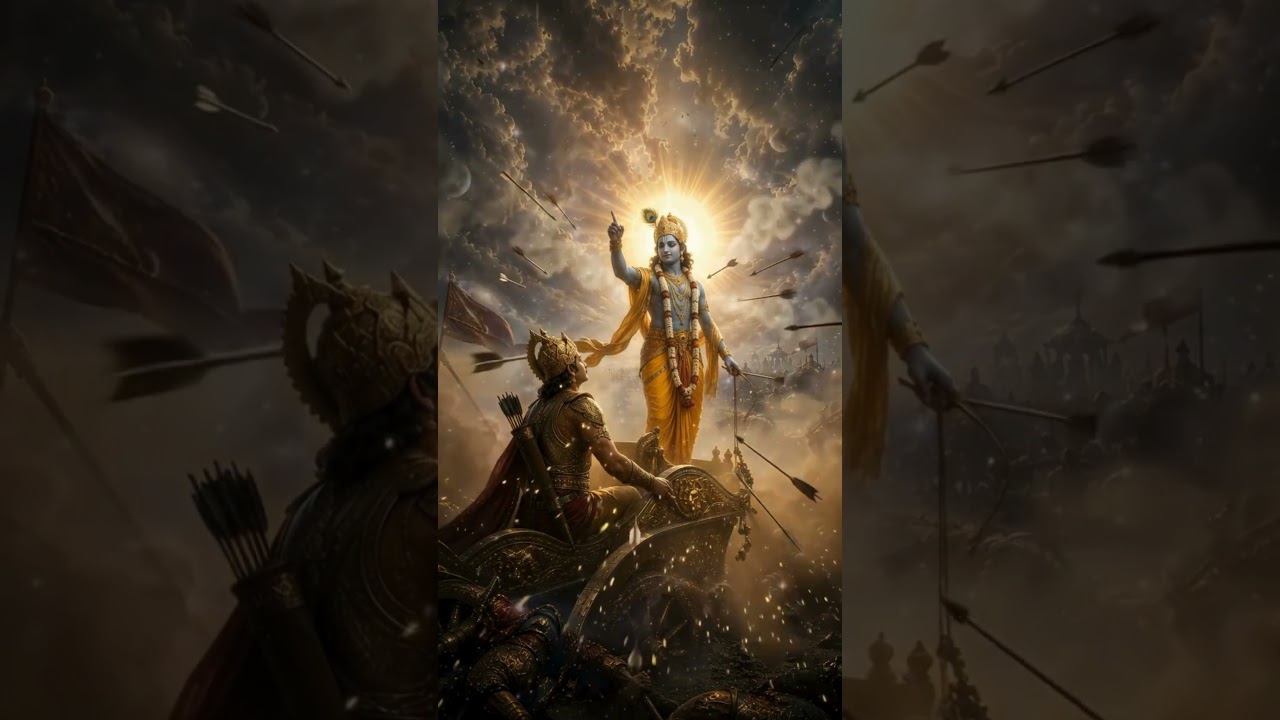
Gita Jayanti falls on 20 December in 2026. The day remembers the Bhagavad Gita being spoken on Kurukshetra, moments before a war Arjuna no longer believes he can enter.
That starting point matters. The Gita is not delivered to a calm student in a quiet forest. It begins when Arjuna’s body trembles, his bow slips and every duty he knows seems to collide with another.
What happens before Krishna teaches?
Arjuna looks across the battlefield and sees teachers, relatives, friends and elders on both sides. The abstract word “war” becomes faces he knows. He asks what victory could possibly mean if it requires their deaths.
Only after that collapse does Krishna begin the teaching. The crisis is not an introduction to skip. It is the reason the Gita exists.
What does Krishna teach?
The Gita moves through many paths: action without attachment to results, knowledge of the self, disciplined attention, devotion, surrender and the vision of Krishna’s cosmic form.
Any sentence claiming “the Gita’s one message is…” should therefore be treated carefully. Its power comes from holding several spiritual languages together.
Why is Gita Jayanti useful today?
The modern temptation is to collect quotes without entering the problem that produced them. Gita Jayanti can be a correction. Read a verse in context. Ask who is speaking, to whom, and why.
A famous line becomes more useful when we know what question it was answering.
How can the day be observed?
Read one chapter slowly. Listen to a recitation. Study a verse with more than one translation. Chant Gita verses you know. Visit Kurukshetra if pilgrimage is possible.
The goal does not have to be finishing all eighteen chapters. One paragraph understood well can be a serious observance.
Why does RudraNāda return to the Gita?
Much of RudraNāda’s Mahabharata music lives near the tension the Gita addresses: fear, duty, mortality, pride, action and surrender.
The Gita is not background philosophy for the epic. It is what happens when the epic’s moral pressure becomes unbearable.