
Diwali 2026 falls on Sunday, 8 November, with the main Lakshmi Puja observed on Kartika Amavasya. But Diwali is not just one night and it does not have only one story. Across India, the festival season carries memories of Sri Rama, Goddess Lakshmi, Krishna and Narakasura, Govardhan, Kali, Bali, brothers and sisters, new account books, family meals and rows of lamps.
That is why short explanations of Diwali often feel incomplete. “Good over evil” is true, but too broad. “Rama returned to Ayodhya” is important, but not the whole story. “Lakshmi is worshipped for wealth” is also too small. Diwali is better understood as a festival season in which different communities use light, cleaning, worship, food, family and memory to mark renewal.
This guide starts with the 2026 date, then moves through the main days, the major stories, regional differences and the simple question underneath all of them: why do people still light lamps on one of the darkest nights of the year?
When is Diwali in 2026?
The main Diwali night in 2026 is Sunday, 8 November. Lakshmi Puja is observed during Kartika Amavasya. In New Delhi, for example, the Amavasya tithi begins late morning on 8 November and continues into 9 November. Exact puja times vary by city, so a local panchang should be used for the final muhurta.
The wider Diwali season begins earlier with Dhanteras and continues after the main night with Govardhan Puja, Annakut, regional New Year observances and Bhai Dooj. Because the Hindu calendar follows tithis rather than midnight-to-midnight civil dates, some observances can overlap or shift by a day depending on place and ritual rule.
What does Diwali or Deepavali mean?
Diwali is the widely used shortened form of Deepavali. Deepavali is commonly explained as a “row of lamps”: dīpa means lamp, and āvali means a row or series.
That name tells us something important. Diwali is not built around one central object hidden inside a temple. Its most recognisable symbol is something ordinary enough to sit on a doorstep: a small lamp. One lamp becomes ten. Ten become a street. The act is simple, but the meaning changes depending on the story being remembered.
For one family the lamps may welcome Rama home. For another they may accompany Lakshmi Puja. In a Jain household they can recall the light of Mahavira’s teaching after his nirvana. The visual language is shared, even when the theology is not.
Why is Diwali celebrated?
Diwali is celebrated for different reasons across India and across religious communities. Hindu traditions connect the season with Rama’s return to Ayodhya, Lakshmi Puja, Krishna’s defeat of Narakasura, Govardhan Puja, Kali Puja, Bali Pratipada and regional New Year observances. Jains remember Mahavira’s nirvana. Sikhs observe Bandi Chhor Divas.
These are not competing explanations where only one can be correct. Diwali grew as a festival complex. Different regions placed different sacred memories inside the same season. The shared themes are easier to see than a single shared story: renewal, protection, right order, abundance, liberation, family bonds and light in darkness.
The Rama story: why Ayodhya lights lamps
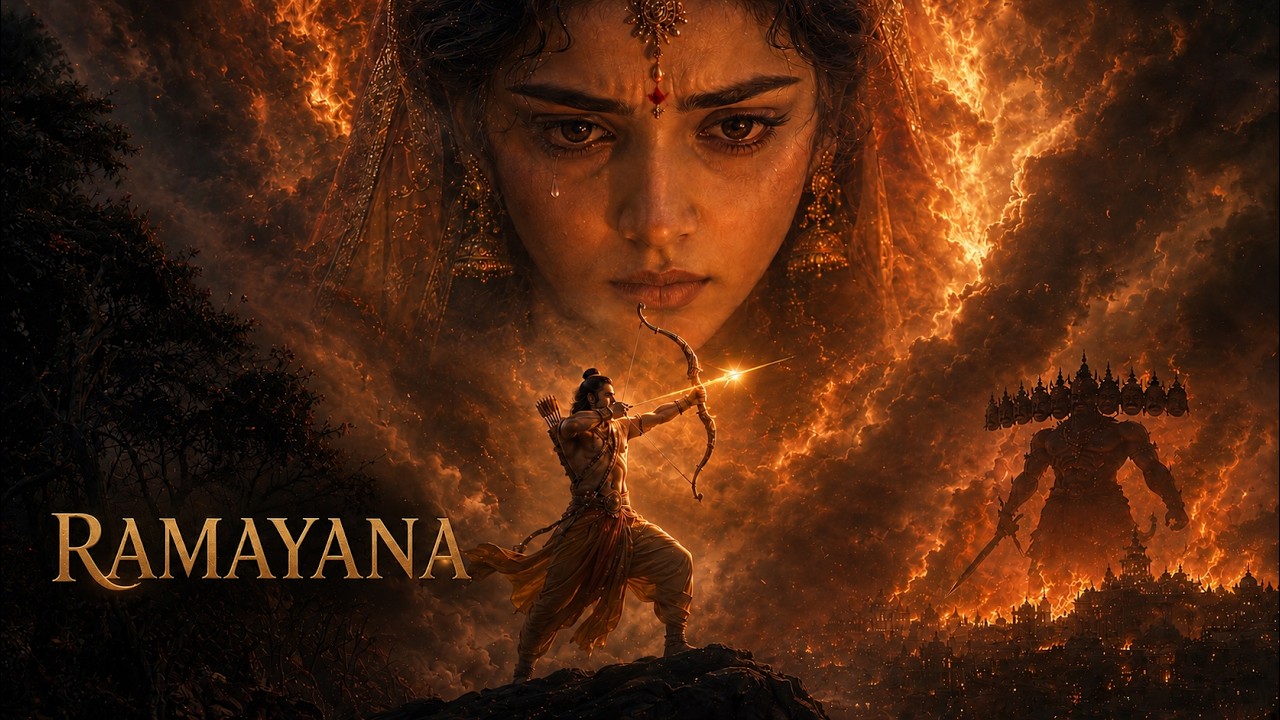
One of the best-known Diwali traditions remembers Sri Rama, Sita and Lakshmana returning to Ayodhya after fourteen years of exile and the defeat of Ravana in Lanka. In the living festival tradition, the people of Ayodhya welcome them with lamps.
The Valmiki Ramayana narrates Rama’s return to Ayodhya at the end of the war. The familiar identification of that return with Diwali belongs to the later and living festival tradition around the epic. That distinction does not weaken the story. It simply keeps the text and the festival memory clear.
The emotional centre of the story is not only victory over Ravana. It is return after separation. A prince who left home under an unjust sentence comes back after years of exile. Lamps become a public welcome.
The Krishna story: Narakasura and Deepavali morning
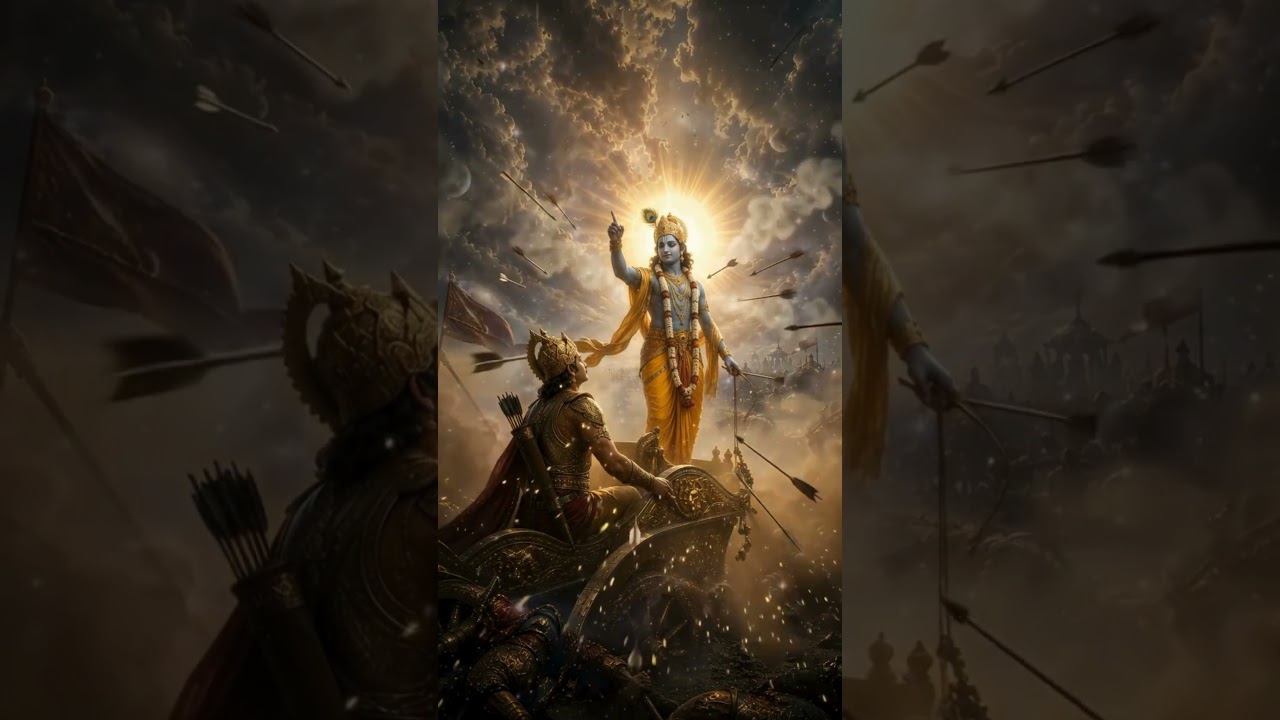
In many South Indian traditions, Deepavali is strongly connected with Krishna’s defeat of Narakasura, also called Bhaumasura. The Bhagavata Purana tells of Krishna going to confront Bhaumasura, with Satyabhama accompanying him.
Festival tradition connects the defeat of Narakasura with Naraka Chaturdashi. In many homes in Karnataka, Tamil Nadu, Andhra Pradesh and Telangana, the early morning becomes central: oil bath, new clothes, sweets, family visits and celebration before sunrise or soon after it.
This is why saying “Diwali is celebrated because Rama returned to Ayodhya” does not describe every Indian household. For many families, the festival begins with Krishna and Narakasura.
Why is Lakshmi worshipped on Diwali?
For millions of Hindu homes and businesses, Lakshmi Puja is the centre of the main Diwali night. Lakshmi is associated with Śrī: prosperity, well-being, beauty, auspiciousness and abundance.
Before the puja, homes are cleaned and entrances are decorated. Diyas are lit. Rangoli or kolam may be drawn. In business communities, account books may be closed or opened around the festival. The house is made ready.
It is easy to reduce this to “worship Lakshmi to get money.” The older idea of prosperity is wider. Food, health, work, generosity, order in the home and the ability to care for others all belong to a fuller sense of abundance.
Popular tradition also links Lakshmi with the Samudra Manthana, the churning of the ocean, where she emerges as a radiant goddess. That story helps explain why the festival joins prosperity with auspicious renewal.
Why is Kali Puja on the same night as Diwali?
In Bengal and parts of eastern India, the same Amavasya night is also observed as Kali Puja or Shyama Puja. Instead of Lakshmi becoming the main divine presence of the night, worship turns toward Kali.
The mood is different. Lakshmi is welcomed into a clean and illuminated home. Kali is approached in the depth of the dark moon, as a fierce form associated with time, death, protection and transformation.
Modern public Kali Puja developed strongly in Bengal over the last several centuries. It should not be flattened into “another version of Lakshmi Puja.” The same night can carry a different devotional centre.

What are the five days of Diwali?
People often speak of the “five days of Diwali,” but the exact five-day sequence is not identical everywhere. A common North Indian framework runs from Dhanteras through Bhai Dooj. In South India, Naraka Chaturdashi may be treated as the main Deepavali day. In Bengal, Kali Puja becomes central. In Gujarat, the New Year adds another strong layer.
The safest way to understand the five days is as a festival sequence rather than a single national checklist.
- Dhanteras: health, prosperity, auspicious beginnings, Dhanvantari and household preparation.
- Naraka Chaturdashi / Choti Diwali: Krishna and Narakasura in many traditions, plus regional cleansing and protective rituals.
- Diwali / Lakshmi Puja: the main Amavasya night of lamps, Lakshmi worship, family gathering and celebration.
- Govardhan Puja / Annakut / Bali Pratipada / Padwa: different fourth-day traditions depending on region and community.
- Bhai Dooj: the bond between brothers and sisters, also known by names such as Bhau Beej and Yama Dwitiya.
Day 1: Dhanteras
Dhanteras, or Dhantrayodashi, falls on 6 November in 2026. It is associated with auspicious beginnings, prosperity and Dhanvantari, the divine physician. Many people buy utensils, precious metal or household items on this day.
The shopping is the visible part. The deeper idea is readiness. The festival season begins by preparing the home and asking what real prosperity should look like: health, enough food, useful work, stability and generosity.
Day 2: Naraka Chaturdashi or Choti Diwali
Naraka Chaturdashi is observed on 8 November in many 2026 Indian calendars, while Kali Chaudas falls on 7 November in some western traditions. The tithi crosses the civil-date boundary, which is one reason simple “five consecutive dates” charts can be misleading.
In Krishna traditions, the day remembers the fall of Narakasura. In many South Indian homes it is the heart of Deepavali: an early oil bath, new clothes, sweets and lamps.
Day 3: Diwali and Lakshmi Puja
The main Diwali night is 8 November 2026. Diyas, Lakshmi Puja, family visits, sweets, gifts and decorations make this the most widely recognised part of the festival.
Amavasya is a moonless night. That physical darkness gives the lamps their force. The festival does not wait for a bright sky. It makes light where light is needed.
Day 4: Govardhan Puja, Annakut and other regional traditions
Govardhan Puja is tied to the story of Krishna lifting Govardhan Hill to protect the people of Braj from Indra’s storm. Annakut, literally a “mountain of food,” is offered in many Vaishnava temples and homes.
In 2026, major calendars place Govardhan Puja around 9–10 November depending on location and ritual timing. Bengaluru calendars commonly place it on 10 November. This is exactly why local panchang context matters.
Elsewhere the day may be known through Bali Pratipada, Padwa, Dyuta Krida or a regional New Year.
Day 5: Bhai Dooj
Bhai Dooj falls on Wednesday, 11 November 2026 in Bengaluru and many Indian calendars. The festival centres on the relationship between brothers and sisters.
The best-known tradition tells of Yama visiting his sister Yamuna. The ritual differs by region, but the emotional movement is simple: welcome, tilak, food, blessing and affection.
After the huge stories of kings, demons and gods, the Diwali sequence closes by returning to the family.
Is Diwali celebrated differently in North and South India?
Yes. North Indian Diwali often puts strong emphasis on Rama’s return, Lakshmi Puja and the main Amavasya night. In many South Indian traditions, Naraka Chaturdashi and Krishna’s defeat of Narakasura are more prominent, and the festival can begin very early in the morning.
But even “North” and “South” are broad labels. Karnataka, Tamil Nadu, Maharashtra, Bengal, Gujarat, Odisha and Assam all have distinctive practices. A good Diwali guide should explain differences instead of pretending there is one national ritual sequence.
Why do people clean the house before Diwali?
Cleaning is practical festival preparation, but it also carries symbolic weight. Old things are sorted. Rooms are repaired. Doors are decorated. A house that has gathered dust and clutter is made ready again.
In Lakshmi traditions, the clean and illuminated home becomes a place prepared for auspiciousness. You do not have to turn this into superstition to understand it. The act asks a useful question: what have we allowed to accumulate, and what are we ready to clear?
Why are diyas lit on Diwali?
Different traditions give different answers. Lamps welcome Rama. They accompany Lakshmi Puja. They stand for the continuing light of Mahavira’s knowledge in Jain tradition. More broadly, the diya becomes a symbol of awareness, hope and clarity.
The symbol works because it is small. A diya does not defeat the whole night. It gives enough light to see what is near. Then another lamp is lit.
Why do people make rangoli and kolam?
Rangoli and kolam transform the threshold, the place between the outside world and the home. Patterns made with powder, rice flour, flowers or colour turn an entrance into a space of welcome.
The style changes by region, but the basic gesture is easy to understand: the home is not closed. It is prepared to receive family, guests and the sacred.
Is Diwali the Hindu New Year?
For some communities, yes. For all Hindus, no. Gujarati communities place the New Year around the Diwali period, and many business communities use the season to close and reopen account books.
Other Hindu communities mark New Year at different times, including Ugadi, Gudi Padwa, Puthandu and Vishu. So the accurate statement is that Diwali marks or leads into New Year in several regional and mercantile traditions.
What does Diwali mean in Jainism?
For Jains, Diwali commemorates the nirvana of Mahavira, the twenty-fourth Tirthankara. The lamps are connected with preserving the light of his knowledge after his physical departure.
This is a distinct religious meaning, not simply the Hindu festival with a different explanation added later.
What is Bandi Chhor Divas?
Sikhs observe Bandi Chhor Divas around the same season. It remembers Guru Hargobind’s release from imprisonment at Gwalior Fort and the tradition that other imprisoned rulers were released with him.
The Golden Temple is famously illuminated during this period. The shared light does not mean the religious meaning is the same as Lakshmi Puja or the Rama tradition.
Why do Diwali dates change every year?
Diwali follows the Hindu lunar or lunisolar calendar, not a fixed Gregorian date. The main night is tied to Amavasya during the relevant Kartika period, so the civil date moves between October and November.
That is why Diwali 2026 is on 8 November even though the festival fell earlier in 2025. The lunar calendar is not “changing the date” randomly. It is measuring the year in a different way.
What does Diwali ask us to remember?
The stories are different, but they repeatedly move through ending and renewal. Rama returns. Narakasura falls. Lakshmi is welcomed. Govardhan becomes shelter. Mahavira attains liberation. Guru Hargobind leaves imprisonment. Families meet again.
Diwali is therefore not only about defeating darkness. It is about what we do after darkness has been faced: clean the house, share food, repair relationships, give, remember, and begin again.