
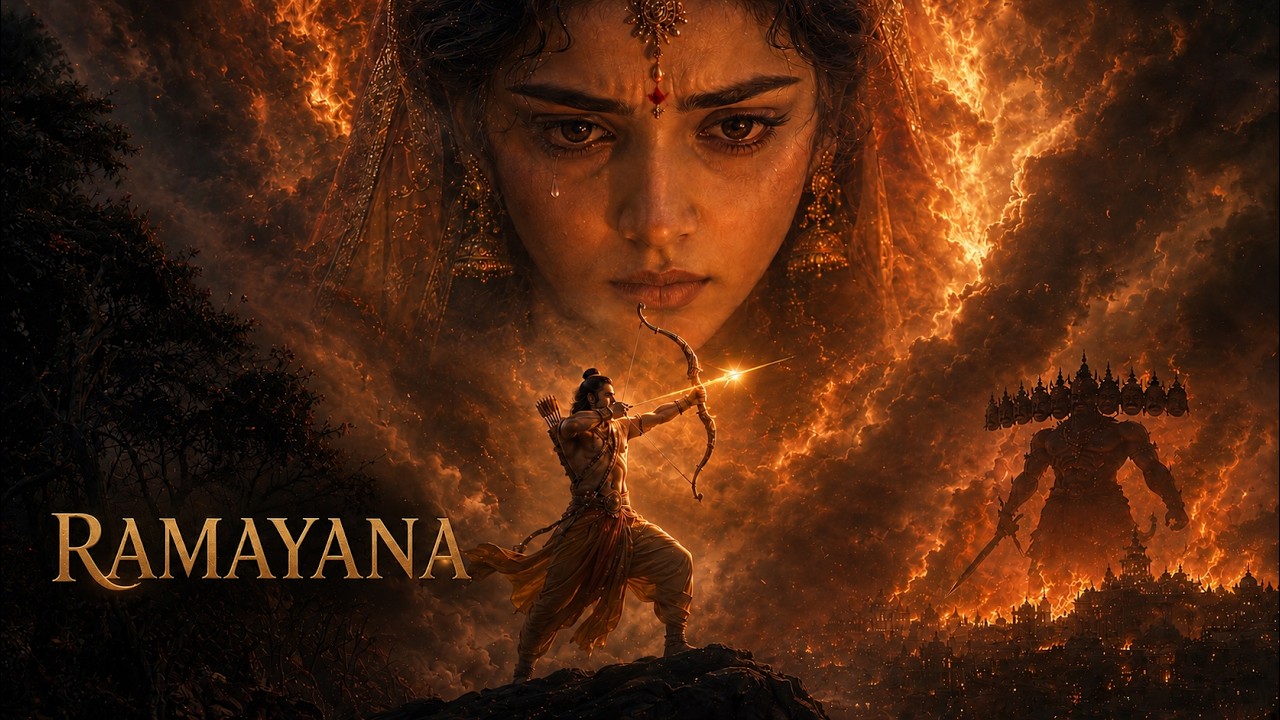
Rama Navami in 2026 falls on 26 March in the Smarta calendar. Some Vaishnava calendars place the observance on 27 March because of differences in tithi rules. The festival celebrates the birth of Sri Rama in Ayodhya.
For many people, Rama Navami is less about a single ritual than about returning to the Ramayana. Temples recite the story. Families chant Rama’s name. In some places the day culminates in a ceremonial birth moment at midday.
What is the story of Rama’s birth?
In the Bala Kanda of the Valmiki Ramayana, King Dasharatha longs for heirs. After the royal sacrifice, a divine preparation is distributed among his queens. Rama is born to Kausalya, while Bharata, Lakshmana and Shatrughna are born to the other queens.
The birth matters because the epic will later ask what kind of person Rama becomes when every easy path is taken away.
Why is Rama called Maryada Purushottama?
Later devotional language often calls Rama Maryada Purushottama, the highest person within the boundaries of right conduct. The phrase captures why Rama is remembered through duty, restraint and kingship.
But the Ramayana is not a simple rulebook. Rama’s choices create admiration, pain and debate. Devotion does not require pretending the epic has no difficult questions.
How is Rama Navami celebrated?
Temple worship, Ramayana recitation, fasting, bhajans and Rama nama are common. In Ayodhya, the festival becomes a major public event. In South India, Rama temples and music traditions give the day their own character.
The form can be elaborate or simple. Reading even one episode carefully can be a meaningful observance.
What can RudraNāda readers take from the day?
Rama Navami can become more than a birthday celebration. It can be a day to ask what dharma looks like when duties conflict and when a person cannot satisfy everyone.
That is where the Ramayana becomes alive rather than decorative.