
Navratri is easy to turn into a checklist. Which colour today? Which form of Durga? What can I eat while fasting? When is Ashtami? All of these are reasonable questions. But if we answer only those, we can pass through nine nights without ever asking why the tradition gives nine nights to the Goddess in the first place.
For Sharad Navratri 2026, the observance begins on Sunday, 11 October, with Pratipada and Ghatasthapana. Vijayadashami falls on Tuesday, 20 October. In several Karnataka panchang calendars, Saptami extends across two sunrise days, so the nine tithis occupy ten Gregorian dates. That is not a contradiction. A Hindu festival calendar follows lunar tithis and local sunrise calculations, not a simple midnight-to-midnight grid.
If you need an exact muhurta for your city, use a local panchang. What follows here is the larger map: the nine forms, the textual layer behind their names, the customs that grew around Navratri, and the inner movement that makes the festival more than a sequence of dates.
Navratri 2026 at a glance
For Karnataka, the broad Sharad Navratri sequence in 2026 runs from 11 October through Vijayadashami on 20 October. Local puja timings can differ by city, and regional Durga Puja calendars may emphasize a different set of ritual days within the same lunar period.
- 11 October, Pratipada: Ghatasthapana and Shailaputri
- 12 October, Dwitiya: Brahmacharini
- 13 October, Tritiya: Chandraghanta
- 14 October, Chaturthi: Kushmanda
- 15 October, Panchami: Skandamata
- 16 October, Shashthi: Katyayani
- 17 October, Saptami: Kalaratri
- 18 October: Saptami continues across another sunrise in several Karnataka panchang calculations
- 19 October, Ashtami: Durga Ashtami and Mahagauri; Sandhi Puja and Maha Navami observances also fall here in common calendars
- 20 October, Navami into Dashami observance: Ayudha Puja, Navratri Parana and Vijayadashami
The nine names are older than the nine-day lifestyle chart
The nine forms commonly called Navadurga are listed together in the Devi Kavaca, a text recited in the wider Durga Saptashati tradition. Its verses name Shailaputri, Brahmacharini, Chandraghanta, Kushmanda, Skandamata, Katyayani, Kalaratri, Mahagauri and Siddhidatri, and then call them the nine Durgas.
This matters because modern Navratri culture often makes the daily colour, food or social-media card feel like the festival itself. Those practices can be joyful and meaningful, but they are not all the same historical layer. The names of the Navadurga belong to a textual and devotional tradition. A weekday colour chart belongs to a much later popular observance.
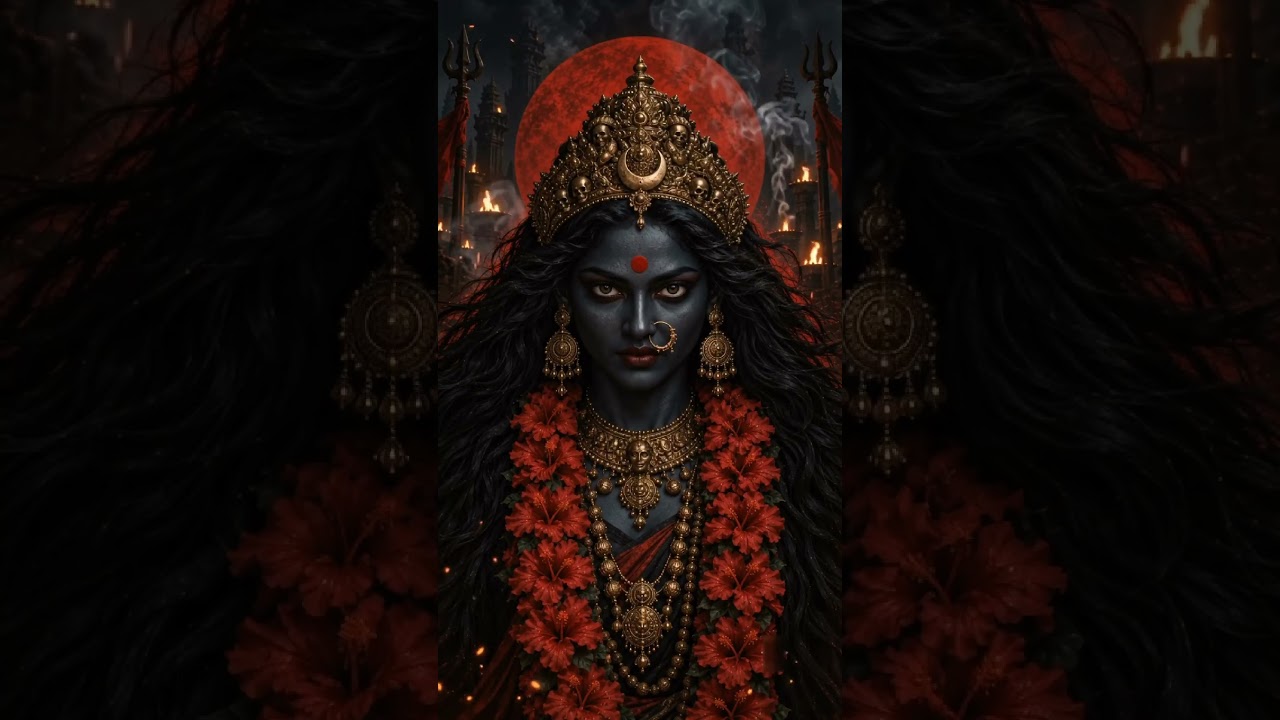
1. Shailaputri: the mountain daughter
Shailaputri literally means “daughter of the mountain.” She is identified with Parvati, daughter of Himavan. The first night therefore begins not with a distant abstraction but with the Goddess entering a family, a landscape and a name.
In later devotional interpretation, she is often associated with grounding and beginnings. That symbolism can be useful, but it should be named for what it is: an interpretation, not a literal translation of an ancient verse.
2. Brahmacharini: the one who walks the path of tapas
Brahmacharini evokes the ascetic Parvati, whose tapas becomes central to stories of her union with Shiva. The form carries the mood of discipline, patience and voluntary simplicity.
There is a quiet correction here for a culture that treats spiritual intensity as emotion alone. Bhakti may sing, dance and weep, but it also returns tomorrow. Tapas is devotion with endurance.
3. Chandraghanta: beauty that is not helpless
Chandraghanta is depicted with a crescent shaped like a bell upon her forehead and with a martial form. The image refuses a common false choice: the feminine must be either gentle or powerful.
Navratri repeatedly breaks that split. The Mother who nourishes can also confront. Protection sometimes wears a serene face, and sometimes it arrives armed.
4. Kushmanda: the mysterious smile of creation
Kushmanda is celebrated in later tradition as a creative form of the Goddess associated with cosmic generativity. Popular explanations often build elaborate etymologies around her name. Those explanations vary, so they are better treated as devotional interpretation than as settled philology.
The spiritual image is still potent: creation does not have to begin with noise. A universe may be imagined as emerging from an effortless divine radiance.
5. Skandamata: divinity as mother
Skandamata is the Mother of Skanda, also known as Karttikeya or Subrahmanya. After asceticism, martial power and cosmic creation, the sequence turns toward motherhood.
The Goddess is not diminished by relationship. She is not less divine because she holds a child. In a tradition rich with renouncers and warriors, motherhood is also allowed to reveal the sacred.
6. Katyayani: the warrior approaches
Katyayani is one of Durga’s fierce forms and is associated in Puranic tradition with the destruction of Mahishasura. Her name is linked with the sage Katyayana in later narratives.
By the sixth night, the festival is moving unmistakably toward confrontation. What is being confronted depends on the level at which one reads the story: a demon in sacred narrative, disorder in the world, or the habits within us that have learned to defend themselves.
7. Kalaratri: the night we would rather avoid
Kalaratri is dark, fierce and visually unsettling. Her presence is one reason Navratri should not be reduced to decorative femininity. The Goddess is also worshipped in forms that refuse to comfort the ego.
The spiritual imagination needs such a form because not every transformation feels luminous while it is happening. Some things are understood only after an old certainty has gone dark.
8. Mahagauri: radiance after austerity
Mahagauri is the radiant form. Devotional readings often place her after Kalaratri as a movement from darkness toward clarity and purification.
It is tempting to make this into a neat self-help staircase. The tradition is stranger than that. Darkness is not simply “bad” and radiance is not merely cosmetic brightness. The sequence invites contemplation more than a fixed psychological formula.
9. Siddhidatri: what is the point of power?
Siddhidatri is the giver of siddhis, attainments or powers. That is a provocative place to end the nine forms. Indian spiritual traditions know the fascination of power, and they also know its danger.
The mature question is not merely, “What can I gain?” It is, “What will I become if I gain it?” A festival of Shakti reaches its depth when power is joined to wisdom.
The nine colours are real as custom, not universal as scripture
The familiar Navratri colour sequence is especially popular in parts of Maharashtra and Gujarat. Contemporary panchang guides often assign a colour according to the weekday on which each Navratri day falls. That is why the colour sequence changes from year to year.
Enjoy the colours. Wear them. Build community around them. Just do not confuse a regional, evolving custom with a universal command from the Devi Mahatmya. Devotion does not become weaker when we know which layer we are participating in.
There is no single Indian Navratri
In Gujarat, Garba and Dandiya can dominate the public imagination. In Bengal, Durga Puja gathers enormous ritual, artistic and social energy around Shashthi through Dashami. In Karnataka, Mysuru Dasara carries a royal and civic history, while Ayudha Puja gives tools, books, instruments, vehicles and implements of work a place in worship. In Tamil and Telugu homes, Golu or Bommala Koluvu may arrange divine and cultural worlds in stepped displays. In North India, Ramlila and the burning of Ravana connect the period to Rama and Vijayadashami.
These are not errors waiting to be standardized. They are evidence of how a tradition travels. The same lunar season can hold Durga’s victory, Rama’s victory, the worship of tools, the invocation of Saraswati, community dance, fasting, recitation and family memory.
What are we really worshipping for nine nights?
Shakti means power, but not merely force. It is the capacity by which anything becomes, moves, knows, protects, creates or transforms. To worship the Goddess only as an external supernatural protector is one valid devotional posture, but it is not the only one available.
The nine nights can also become a discipline of attention. What in me needs courage? What needs restraint? What have I confused with strength? Where has fear disguised itself as control? What must be protected, and what must be allowed to end?
A useful Navratri does not require spiritual theatre. Choose one practice you can keep: a daily Devi name, a short recitation, a lamp, a period of silence, a food discipline observed without pride, or ten minutes of listening in which you are not also scrolling. Let repetition deepen rather than accumulate.
Vijayadashami and Sri Rama: the victory remembered at the end of Navratri
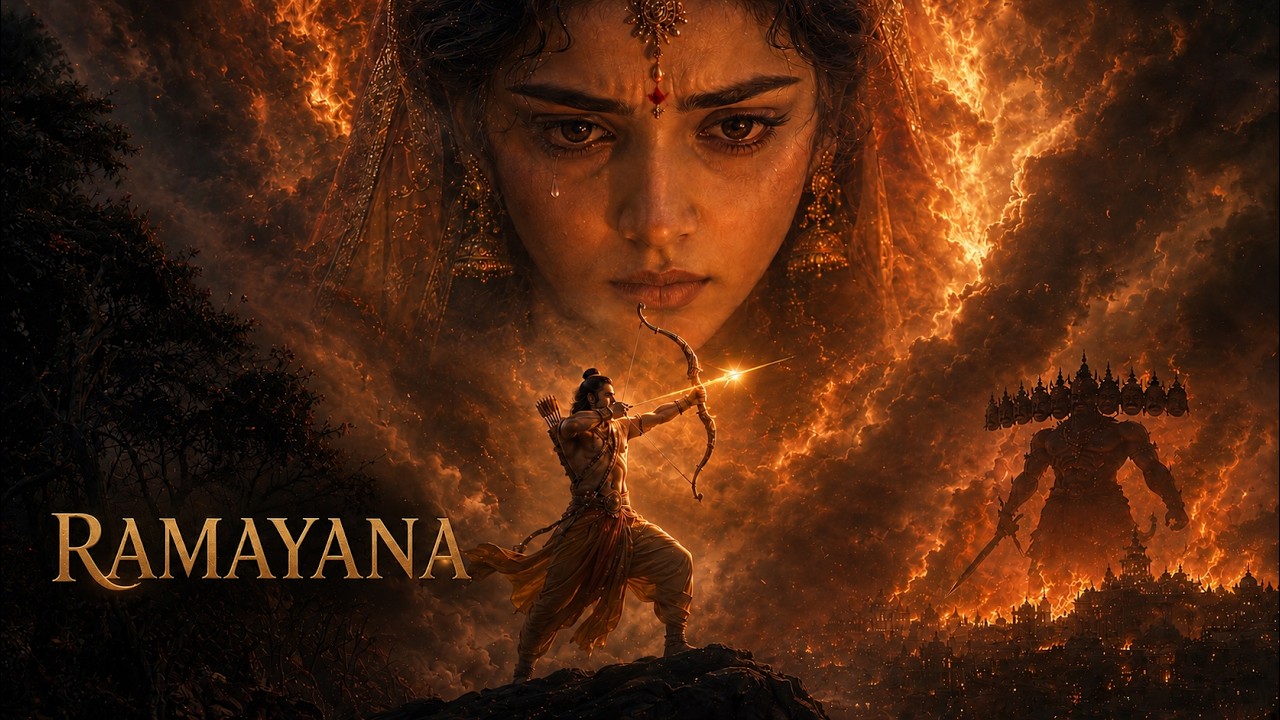
For millions of people, Vijayadashami is also inseparable from Sri Rama. In North Indian Dussehra traditions, the final days of Ramlila move toward the battle in Lanka and the defeat of Ravana. Effigies of Ravana, Kumbhakarna and Meghanada are burned in many places, turning the epic battle into a public memory of dharma confronting arrogance, abduction and destructive power.
The Valmiki Ramayana tells the final battle in the Yuddha Kanda. Rama and Ravana meet after a war that has already consumed warriors on both sides. When the moment comes, Rama uses the weapon associated with Brahma and Ravana falls. The story does not need Ravana to be weak or foolish in order for Rama’s victory to matter. Ravana is formidable, learned and powerful. His fall is therefore not a victory over incompetence. It is a warning that brilliance without restraint can still carry a person toward ruin.
It is worth keeping one textual distinction clear. The Valmiki Ramayana narrates Ravana’s death, but the familiar festival equation “Vijayadashami is the exact calendar day on which Rama killed Ravana” belongs to the living ritual and retelling tradition rather than to a simple date statement in the Sanskrit epic. Ramlila, especially in North India, often draws heavily on Tulsidas’s Ramcharitmanas and culminates during the Dussehra season.
This is one reason Vijayadashami can hold more than one sacred memory without contradiction. In a Shakta frame, the season culminates in the victory of Devi over Mahishasura. In a Rama tradition, it remembers Rama’s victory over Ravana. In Karnataka, Ayudha Puja and Mysuru Dasara add further layers. The shared word is vijaya, victory, but the deeper question is always the same: after power defeats disorder, what kind of order will it create?
The tenth day is not an escape from the nine nights
Vijayadashami is called a day of victory, but the most interesting victories in the epics and Devi traditions are never merely about defeating someone else. Victory asks what order is restored after conflict.
If Navratri has any inner arc, the tenth day is not “I won.” It is the beginning of responsibility after power has been awakened. A sword, a book, a veena, a vehicle and a worker’s tool can all be honoured on Ayudha Puja because power is safest when we remember that what we use also shapes who we become.